
Industry
Part of Paper marbling: four preparations that must line up before anything else
Paper marbling classes: questions to ask and notes to keep
Questions to ask before booking a paper marbling class: the four causes of a gray sheet, who mixes the size and alum, which style to learn first.
What to take away
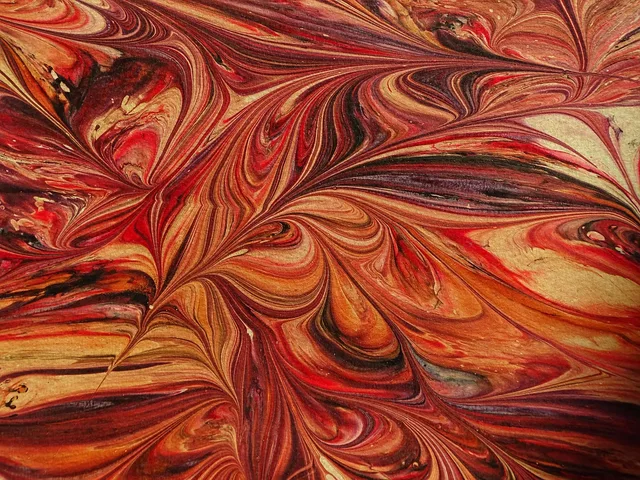
- Marbling is the strongest argument for taking a class, because the bath is the hard part and a working bath is hard to borrow.
- A gray sheet has four suspects that look identical in a photograph. A class shows you the bath that is behaving.
- The most useful class lets you mix the size and apply the alum yourself.
- Take home your sheets, written ratios and a photograph of the bath surface when it behaved.
Four suspects behind a gray sheet
A gray, washed-out sheet has four possible causes, and in a photograph they look identical. In a class the instructor can show each one beside a bath that is behaving, which no book or picture can do.
| Suspect | What it means | Question to put to the instructor |
|---|---|---|
| Thin bath | The size is too thin | What should the bath look like when it is right? |
| Weak mordant | The alum is too weak | How was the paper prepared, and how strong is the alum? |
| Over-dispersed color | The color has been thinned too far | How much dispersant goes into each color? |
| Heavily sized sheet | The paper itself is sized too heavily | Is this paper sized heavily or lightly? |
Standing next to a bath that is behaving correctly resolves in ten minutes what a month of solitary attempts might not, because you learn what a good surface looks like before you have to judge your own.
Mix it yourself if the class allows it
Ask whether you mix the size and apply the alum yourself. A class that hands you pre-alumed paper teaches you patterns but not the preparation that decides whether patterns work at home.
Three questions settle it before you book:
- Is the size mixed for you, or do you mix it?
- Do you apply your own alum, or is the paper prepared in advance?
- How many sheets will you actually pull?
Preparation is the part a weekend practice plan repeats at home, so a class that skips it leaves the practice with nothing to repeat.
Suminagashi or Western marbling first
Suminagashi needs no thickened size and no mordant, so it is a cheaper first class. Western marbling teaches more transferable preparation. The choice is between the cheaper start and the class that shows you more of what goes into the bath.
How the process runs from the first step to the finished sheet is laid out in paper marbling explained, which is worth reading before either class so the vocabulary is familiar.
How long a class needs to be
A one-day class is enough to see a working bath and pull sheets, which is the main value. It is not enough to learn to diagnose a bath that is misbehaving, and that skill comes from the practice that follows.
Outside the United States the residential short course is a common format. West Dean College in England lists a short course in creative papermaking covering translucency and light, the kind of narrowly framed session that suits someone who already knows the basics.
Short residential courses are demanding and efficient: setup and cleanup are handled for you, so the hours go on the work rather than on mixing and washing up.
Two published sources for classes
Several university programs open classes to people outside the institution. The University of Texas at San Antonio's community art program lists book arts and papermaking classes at all levels in papermaking, bookbinding, decorative paper techniques and letterpress printing.
Classes meet in dedicated paper and book arts studios and are open to community enrollment. For classes across the wider book arts, finding journal classes and studios applies the same reasoning.
What to take home
Take your own sheets, written notes on the size and dispersant ratios that worked, and a photograph of the bath surface when it was behaving. That last one is the reference you will use most.
The notes also tell you what to buy first for home practice.
Common questions
Can I tell from a photo why a sheet failed?
No. A thin bath, weak mordant, over-dispersed color and a heavily sized sheet all look the same in a photograph, which is why standing beside a working bath helps.
Is a one-day class enough?
Enough to see a working bath and pull sheets. Not enough to learn to diagnose a bath that is misbehaving.
Are guild workshops worth it?
Often, and they are usually cheaper than university programs. The Guild of Book Workers, the national book arts organization in the United States, is the usual way in, and a university community page sometimes lists local groups too.
What should I ask before booking?
Whether you mix the size, whether you apply your own alum, and how many sheets you will actually pull. Hours at the tray matter more than hours on the schedule.