Industry
Part of Does the paper damage record actually point to water more than workmanship?
Paper craft case studies: 5 lessons from two Mainz Bibles
Paper craft case studies from two Mainz Bibles, one written, one printed: five bench lessons on sewing supports, vellum, rebinding, page layout and slow work.
What to take away
The paper craft case studies here are two books made in Mainz within a few years of each other and now held by the Library of Congress: the handwritten Giant Bible of Mainz, finished in 1453, and the printed Gutenberg Bible, completed late in 1455. Two university library exhibits fill in the printing story: the University of Missouri's incunables exhibit and Oregon State University's Gutenberg press page. Together they give five lessons:
- Lesson 1sewing supports carry a heavy book, so count and size them before you sew.
- Lesson 2the material decides how long the pages last, which is why the best-preserved copies are on vellum.
- Lesson 3a binding is not forever, so sew and cover in a way a later binder can undo.
- Lesson 4plan the page before the first sheet, with ruling and a fixed column grid.
- Lesson 5big projects take months and new tools take years, and most good tools are adapted from old ones.
What this has to do with bookbinding
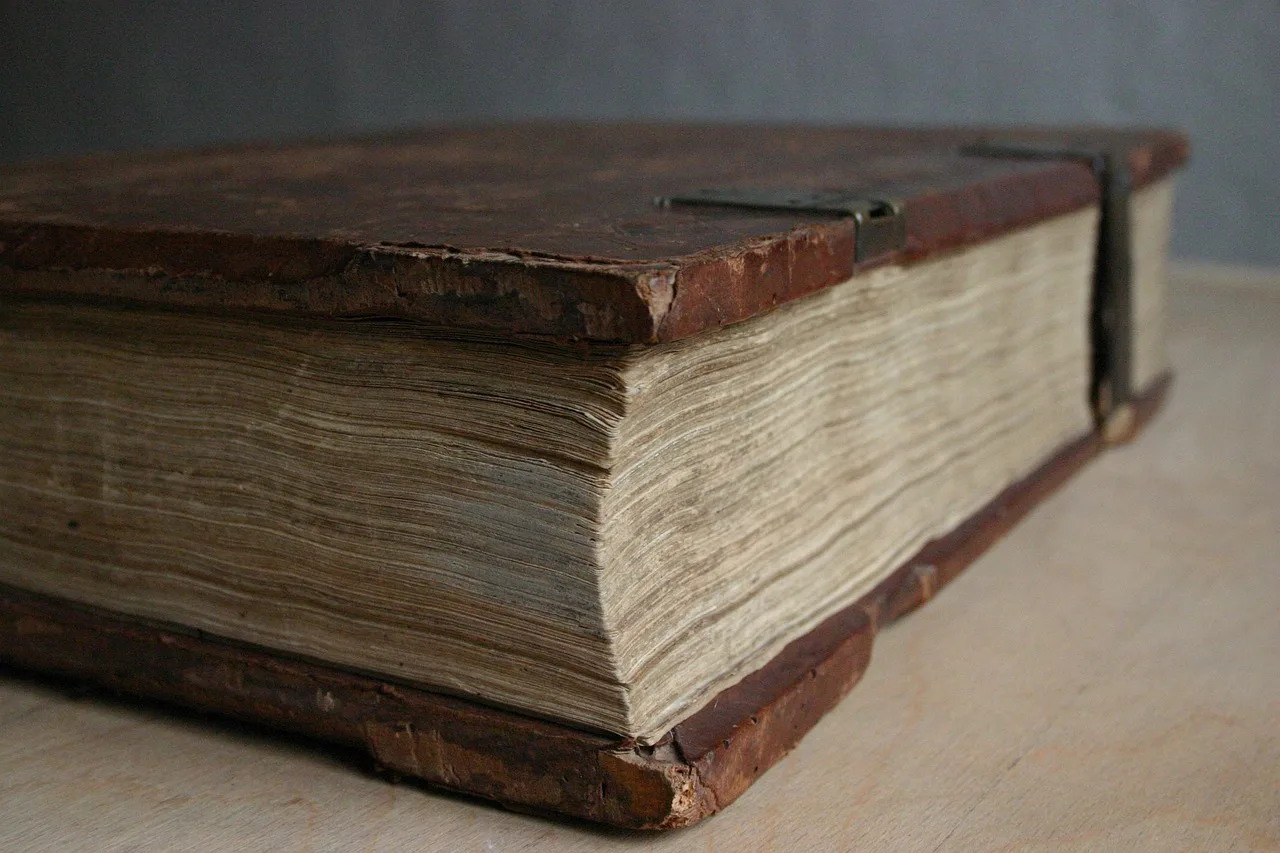
Early books are bound objects first. A scribe or a press produced the sheets. A binder then folded, gathered, sewed, and attached those sheets to boards. Covering came last.
For bookbinders and paper artists, every surviving early book is a case study in paper, sewing, and structure. Special collections often describe the binding alongside the text, so the same published record that tells printing history also tells craft history. Read it for the writing surface, sewing supports, endbands, board attachment, and covering. Then test those observations against your own work.
The Library of Congress describes both Bibles in its Bible collection exhibition. The Giant Bible of Mainz is one of the last great handwritten giant Bibles in Europe, and the Gutenberg Bible is the first great book printed in Western Europe from movable metal type. Set side by side, they show the same craft problems solved by hand and by press.
Lesson 1: sewing supports carry the weight
The Giant Bible is composed of 459 vellum skin leaves, each measuring 22 x 16 inches. The Library of Congress records that the text block is secured by nine cords, with head and tail bands of red, white, and green silk, and that the manuscript is bound in full contemporary pigskin, without decoration.
Nine supports on a spine that tall is the point to copy. A large, heavy text block needs enough cords to spread the load of opening and closing across the whole spine, and endbands at head and tail to protect the ends of the sections. When you plan a big book, decide the number of supports from the height and weight of the block, not from what looks tidy.
Lesson 2: the material decides the life of the page
The Library of Congress copy of the Gutenberg Bible is printed entirely on vellum, a fine parchment made from animal skin, and is one of only three perfect vellum copies known to exist; the others are at the Bibliothèque Nationale and the British Library. The Giant Bible, written a few years earlier, is on vellum too.
The lesson for the bench is to choose the writing or printing surface for the life you want the book to have. Vellum and parchment behave differently from paper: they react strongly to humidity and need a structure that holds them flat. Paper has its own grain direction that must run parallel to the spine. Either way, the material choice comes before the binding choice.
Lesson 3: bindings get replaced, so make yours undoable
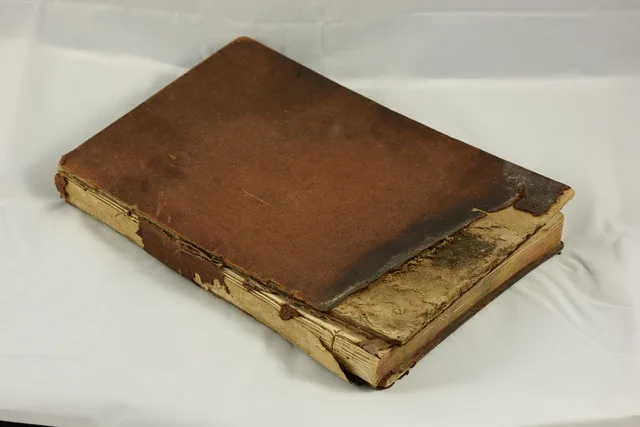
The Gutenberg Bible was printed in 1455, but the Library of Congress copy is in three volumes in white pigskin bindings that date from the sixteenth century. For nearly five centuries the Bible stayed with the Benedictine Order in monasteries in Austria, and the binding it wears today is younger than the printing.
That is normal for books that are used. Binders replace covers, resew sections and rebuild boards. Sew with thread and supports a later binder can cut and redo without damaging the folds, and use adhesives that can be released. The book you bind today should be able to survive its next binder.
Lesson 4: plan the page before the first sheet
Both Bibles were planned before a single letter went down. The Giant Bible's pages are fully ruled in faint brown ink, which guided the scribe, and the text runs in two columns of sixty lines per page. The Gutenberg Bible is printed throughout in double columns, for the most part with forty-two lines to a page, and its capital letters and headings are ornamented by hand in color.
For a handmade book, rule or template the page before you write, print or collage on it, and leave the spaces for anything added by hand later. A grid decided once saves a whole run of sheets from drifting.
Lesson 5: big projects take months, new tools take years
The scribe of the Giant Bible recorded his progress: he began on April 4, 1452, and ended on July 9, 1453, fifteen months after beginning the project. Keep the same kind of dated log for a long binding project; it is the only honest guide to how long the next one will take.
A working method, once found, travels fast. University of Missouri Libraries' exhibit on incunables in special collections dates the start: movable type printing began in Europe in the 1450s in Mainz, with the Gutenberg Bible in 1455, and within ten years presses were operating in Italy.
Printing spread across Europe
- 1450sMovable type begins in Mainz
- 1455Gutenberg Bible printed
- within 10 yearsPresses operating in Italy
- by 1475France, Switzerland, Holland, Hungary, Belgium
- by 1485England, Austria, Denmark, Sweden
A technique that works travels on its own, because the people who need it go and find it. If a method you have invented is not used anywhere, someone likely tried it already.
Getting to that point took far longer. Oregon State University's exhibit page on the Gutenberg press describes the sequence. Gutenberg, a goldsmith, began designing a machine in 1436 and had the basics, including mobile reusable type, established by 1440.
How the Gutenberg press was built
- 1436Gutenberg begins designing the machine
- 1440Basics including reusable type established
- by 1446Working prototype built
- 1454Press used commercially for indulgences
- 145542-line Bible printed
He built a working prototype within ten years, put the press to commercial use in 1454 producing indulgences, and printed the 42-line Bible in 1455. The press itself was built around the traditional screw press with a matrix added. An existing machine, adapted, over roughly two decades: that is what almost every good bench solution turns out to be, and it is a better working model than waiting for the right purpose-built tool to be affordable.
What this means at your bench
| Record says | Bench version |
|---|---|
| Good techniques spread fast | If nobody uses it, ask why |
| Presses were adapted, not invented | Modify what you own first |
| Prototypes took years | Expect your version to take longer |
| Objects outlast accounts of them | Keep the object, not just the photo |
The same evidence reasoning runs through what the documented record teaches: read the object itself, its writing surface, sewing, boards and covering, before you read the story attached to it. It also makes later binding failures easier to read, because you already know the structure underneath.