Reviews
Part of Planning a bookbinding project means picking the structure before the idea
Good bookbinding work needs two separate benches: one for cutting, one for pressing
Best work surfaces for bookbinding projects: cutting and pressing want opposite things from a bench. A comparison of surface types for bookbinding.
What to take away
- No products were bought or tested for this article. It compares surface types, not brands.
- The surface has two jobs that pull in opposite directionstaking a knife, and staying flat.
- Bare wood and wood composites are a poor choice under paper stored on them, whatever they are like to cut on.
- A cheap surface you replace often beats an expensive one you protect.
The two jobs, and why one surface rarely does both
A cutting surface should grip the material, absorb the blade, and be cheap enough to score. A pressing and assembly surface should be dead flat, hard, and non-absorbent. Those are different requirements. Most home benches try to make one surface do both, and the result is a warped, scarred board that neither cuts well nor presses flat.
Bench Surface Options
Surface
- Self-healing mat
- Knife work, measuring
- Plate glass
- Pasting out, flatness
- Melamine board
- Assembly, pressing
- Scrap binder's board
- Sacrificial cutting
- Bare plywood
- Nothing in particular
Good for
- Self-healing mat
- Cups, holds paste
- Plate glass
- Blunts blades instantly
- Melamine board
- Chips at edges
- Scrap binder's board
- Replaced often
- Bare plywood
- Acidic, uneven, splinters
Weakness
- Self-healing mat
- Plate glass
- Melamine board
- Scrap binder's board
- Bare plywood
The practical answer is two surfaces on one bench: a cutting mat you can lift away, and a hard flat area beside or under it.
The two jobs
Good for
- Self-healing mat
- Knife work, measuring
- Plate glass
- Pasting out, flatness
- Melamine board
- Assembly, pressing
- Scrap binder's board
- Sacrificial cutting
- Bare plywood
- Nothing in particular
Weakness
- Self-healing mat
- Slowly cups, holds paste
- Plate glass
- Blunts blades instantly
- Melamine board
- Chips at edges
- Scrap binder's board
- Replaced often
- Bare plywood
- Acidic, uneven, splinters
Why wood is the wrong bench for stored paper
Cutting on wood is merely inconvenient; storing paper on it is a different problem. Park Service guidance on storing archival paper-based materials says to keep paper away from acidic plywood, pressed wood board, wood slats and frames.
It warns that oak shelving is highly acidic and that new furniture made from chip board, plywood, particle board or masonite outgasses. Wait about six months after installation for new furniture and carpeting to finish outgassing before collections move in.
For a bench, that means: cut on what you like, but do not leave sheets face down on raw wood between sessions.
Plastic sheeting and mats
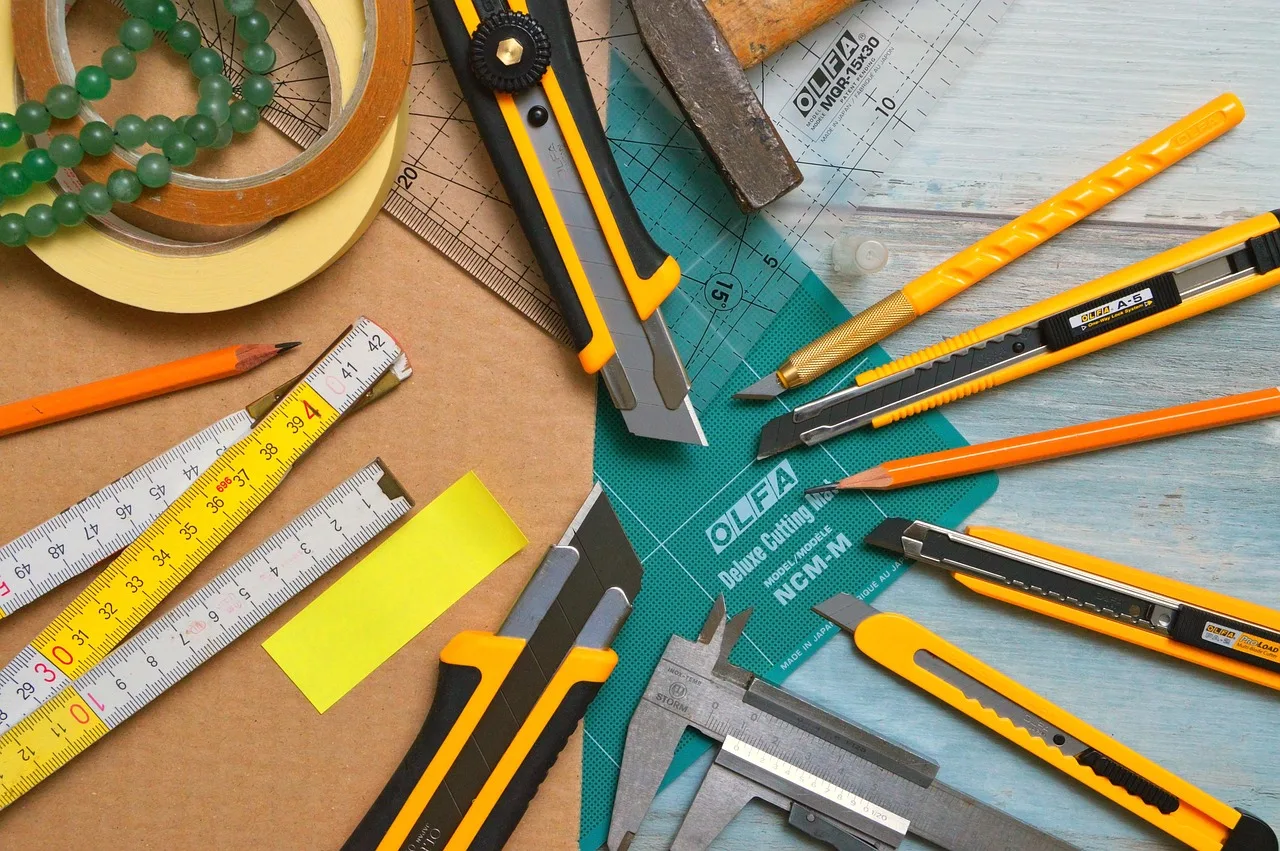
A self-healing mat is the default for a reason, and it has a known failure mode: it cups if stored upright or left in sun, and it absorbs adhesive that later transfers. Store it flat, wipe it, and accept that it is consumable.
For items sitting on a surface a long time, the Park Service note on safe plastics and fabrics is a useful check. It asks if a material is chemically stable and physically durable. It also asks if it carries a static charge that draws dust and abrasives, and if breathable textile beats plastic in high or fluctuating humidity.
Static is the reason a plastic-topped bench gathers grit that then gets dragged under a straightedge.
What to actually do
- Bench top of melamine-faced board, flat and washable.
- A self-healing mat that lives on it and gets lifted off for pasting.
- A sheet of glass or a scrap of laminate for pasting out, replaced when it gets tacky.
- Two pressing boards, kept flat and used for nothing else.
That combination costs little and matches the zone layout in a small-space setup. The sequencing that makes those zones necessary is in planning bookbinding projects.