Reviews
Part of 4 points on handmade journal ideas that matter
Storing handmade journal materials: avoid crowding, avoid contact damage
Crowding and contact cause most damage to stored paper. Enclosures, interleaving, and where in the house to keep stock for handmade journals.
What to take away
- Store stock the way you would store a finished book, because it will become one, and check it for damage rather than for insects.
- Flat, dark, dry, off the floor, and away from exterior walls.
- Enclosures matter more than shelving. A box does most of the work.
- Remove metal, tape and old plastic from anything you are keeping for a journal before it goes into storage.
Read the damage, not the shelf
A store looks fine until you remove something, which is why inspection means checking the material, not the room. identifying mouse and rat damage from the Park Service shows what evidence looks like.
Rodents climb, jump, burrow, and gnaw with their front incisors, and mice can pass through very small gaps. The guidance covers identifying their activity and damage, not expecting to see the animal.
The same principle applies to everything else in a cupboard. Cockling, a musty smell, a curled edge or a yellowed margin are all readings, and each of them tells you something about the space rather than about the sheet.
Get the enclosure right before the shelf
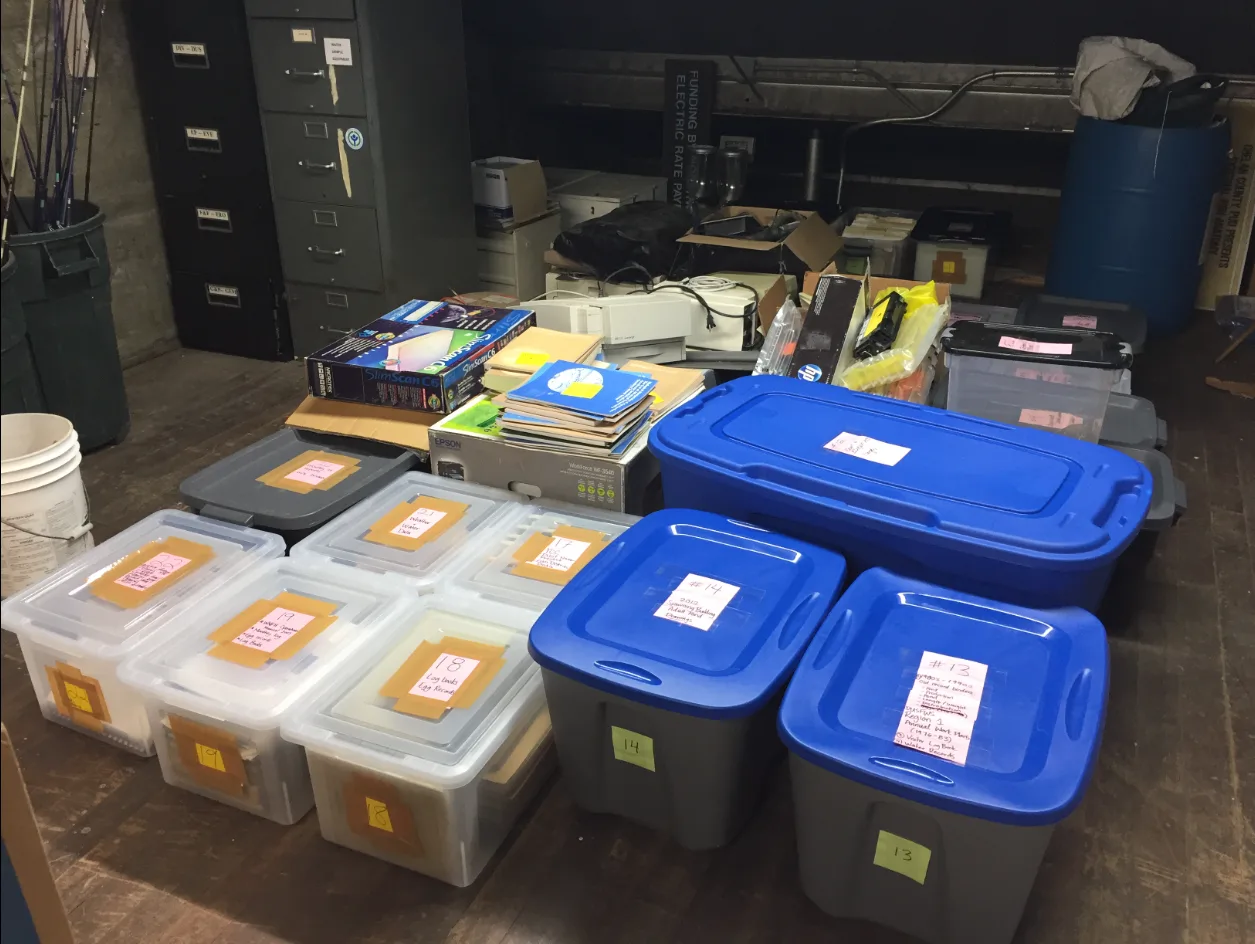
Park Service guidance on housing archival paper-based materials sets what touches your stock: acid-free, high alpha-cellulose folders, enclosures, and boxes. No alum rosin sizing, no lignin-containing groundwood, no volatile plasticizers.
It recommends standardizing on a few folder sizes within containers. That sounds like housekeeping, but it is preservation: standard sizes stop sheets sliding and creasing.
For a home maker that translates into two purchases: a small number of flat boxes in one or two sizes, and a stack of plain interleaving sheets.
A workable home arrangement
| Material | Store as | Avoid |
|---|---|---|
| Text and cover paper | Flat, in a shallow box | Standing on edge in a corner |
| Board | Flat, supported full width | Leaning against a wall |
| Decorated sheets | Interleaved, flat, boxed | Stacked face to face |
| Thread and cloth | Dark, dry, closed container | Sunlight on a shelf |
| Ephemera for journals | Sorted, metal removed | Loose in a shoebox |
Strip the metal and the tape
Anything you are saving to put into a journal deserves a minute of attention before it goes into storage. Remove paper clips, staples and pins, all of which rust and stain. Remove old pressure-sensitive tape if it lifts easily, and leave it alone if it does not, because forcing it takes the surface with it.
Old plastic sleeves are worth checking too. Soft, slightly oily plastic is usually not stable and should be replaced with polyester or plain paper. If a sleeve smells sharp when you open the box, it is breaking down and everything inside it needs rehousing.
Where in the house
Choose an interior cupboard on a living floor. Avoid basements, garages, and lofts. Keep it above floor level in case of a leak, out of direct light, and away from an exterior wall.
The layout logic is in a small-space setup. What you store depends on which formats you make, covered in eleven journal ideas.