Reviews
Part of 4 points on handmade journal ideas that matter
Awl versus screw punch: comparing tools for a handmade journal
Handmade journal ideas tools compared for first-time buyers: awl against screw punch, bone against Teflon, and what thickness of polyester pocket to use.
What to take away
- No brands were bought, compared or ranked here. This compares categories of tool and the trade-offs between them.
- The piercing tool is the choice that most changes how a journal-making session feels.
- An accordion insert adds a fold-out without touching the sewing, and it costs one sheet.
- Buy one of each category before buying a second of anything.
Piercing: awl, screw punch, or template
Best for
- Round-point awl
- Sewing through folds
- Japanese screw punch
- Stab bindings, covers
- Pierced template
- Repeat editions
- Bradawl or nail
- Nothing
Cost of getting it wrong
- Round-point awl
- Stations drift without a template
- Japanese screw punch
- Overkill for folded sections
- Pierced template
- Time spent making it
- Bradawl or nail
- Splits fibers, ragged holes
An awl and a folded paper template will cover almost every journal in the eleven journal formats. A screw punch earns its cost only when you are going through cover board rather than folded paper.
Piercing tool comparison
Round-point awl
- Best for
- Sewing through folds
- Cost of error
- Stations drift
- Cover board
- Not ideal
- Folded paper
- Covers almost all
Japanese screw punch
- Best for
- Stab bindings, covers
- Cost of error
- Overkill for folds
- Cover board
- Earns its cost
- Folded paper
- Overkill
Pierced template
- Best for
- Repeat editions
- Cost of error
- Time making it
- Cover board
- Possible
- Folded paper
- Covers almost all
Folders, needles and thread
Folders come in bone, Teflon and plastic. Bone burnishes hardest and can shine a coated paper; Teflon does not shine but costs more; cheap plastic marks. Buy one bone folder and one small Teflon if you cover with coated stock.
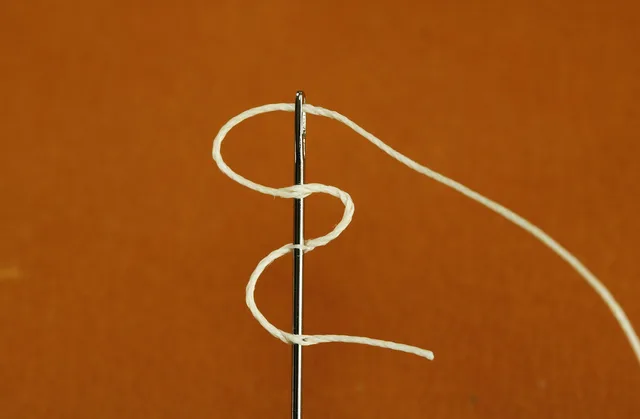
Needles should be blunt, not sharp. A sharp needle wanders in a fold and enlarges the station, and an enlarged station is what lets sewing go slack later. Thread should be unwaxed linen that you wax yourself, so you control how much wax goes on; pre-waxed thread is often over-waxed and leaves deposits in the fold.
Adding fold-outs and inserts
Journals grow sideways and forwards, and the answer is usually an insert, not a bigger book.
Bennington College's guide to artists' books by structure is a useful index: it covers pamphlet stitch, Coptic binding, Japanese stab bindings, post binding, tunnel books.
Pop-ups are included, and accordion books are a continuous folded sheet of paper, often enclosed between two covers.
That last definition is the one to act on. An accordion tipped into an existing journal gives you a fold-out without altering the sewing, and it needs no tool you do not already own.
Mounting without adhesive
For sticking things in, the most reversible option needs no adhesive on the object. The Park Service instructions for making mounting corners describe corners made from archival buffered paper or polyester film.
The corners hold a photograph or paper item by its corners, are simple to make, and need no adhesive on the object. The same note warns against use where the item's corners could bend or be damaged.
Home-made paper corners cost nothing, are cut from an offcut in under a minute each, and can be made in whatever size the item needs rather than whatever size is sold.
What not to buy first
A guillotine, a stack of colored threads, a bone folder set, a kit. The first three are round-two purchases and the fourth usually contains a straightedge too short to be useful. The staged buying order that applies here is set out in what to buy first.