Reviews
Part of Book arts turns out to be four crafts sharing a single material
The tools that actually earn bench space in book arts, and what can wait
The short list of tools that actually earn bench space in book arts, what each one is for, where to spend, and which purchases can wait until year two.
What to take away
- Eight items cover almost everything a beginner does. The rest is optional for a long time.
- Buy the cutting tools well and the decorative tools cheaply, not the other way round.
- No brands are ranked here, because nothing was bought or tested for this article.
- A press is the largest purchase most people make too early.
The eight that earn their space
The list below is not invented. It is close to the kit the National Park Service specifies for making a protective phase box, a job that involves measuring, scoring, cutting and folding board, which is most of what binding is.
- Bone folder, for creasing folds and rubbing down covering material without shine.
- Snap-off blade utility knife, so you always have a fresh edge.
- Steel rule, at least 24 inches, with a non-slip back.
- Self-healing cutting mat, or a sheet of scrap board you replace often.
- Dividers, for stepping off equal sewing stations.
- Set square or T-square for right angles.
- Bookbinding needles and unwaxed linen thread.
- Awl, ground to a round point rather than a triangular blade.
Where to spend and where not to
Spend on the rule and the square. A rule that flexes or a square that is not square puts an error into every cut afterward, and you will blame your hands.
Blades are consumable, so buy them in bulk and change them far more often than feels necessary. Because a dull blade tears board instead of cutting it, you press harder and then slip.
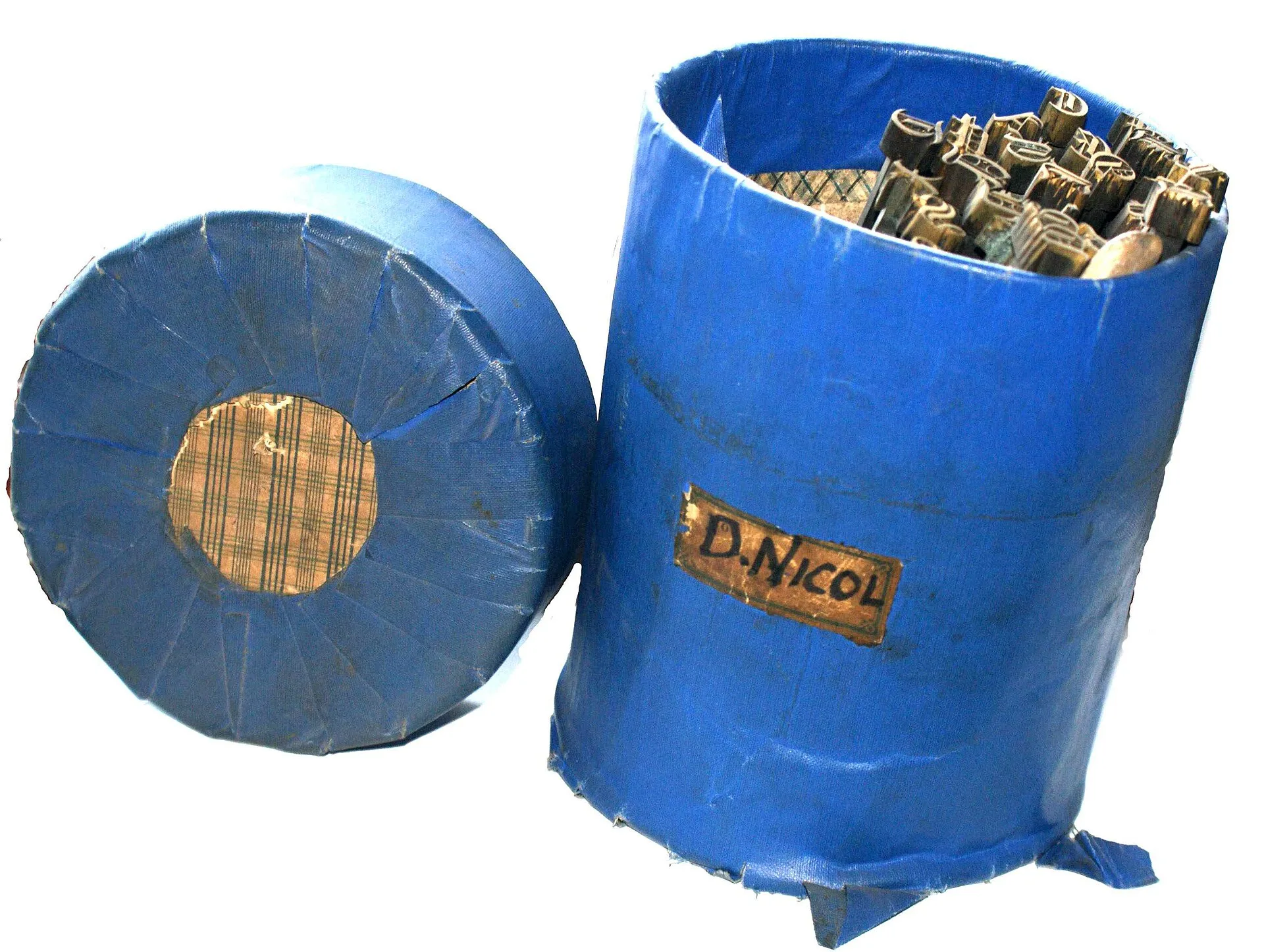
Do not spend on decorative brass tools, expensive brushes, or a fitted case. A cheap glue brush trimmed short works better than a soft artist's brush, because you want stiffness to push adhesive into cloth rather than a soft tip that floods the surface.
The gloves question
Beginners often assume white cotton gloves are the professional signal, but the Park Service guidance on selecting gloves is more careful. Nitrile is now preferred over cotton for most collection handling.
Gloves are sometimes the wrong answer, because they cost you the sensitivity a delicate object needs. For ordinary bench work on new materials, clean dry hands are fine. Gloves matter when you handle finished work, old paper, or anything that will show fingerprints later.
What can wait
A nipping press, a board shear, a plow, a Japanese screw punch and a sewing frame are all real tools that solve real problems, and none of them solves a problem you have in month one. Weight substitutes for a press. A knife and a straightedge substitute for a shear. A pierced template and an awl substitute for a punch.
The thing worth buying early instead is more board and more paper, so you can afford to throw away the first three attempts. Choosing those materials matters more than the tools, and the surface you cut on matters more than most people expect, which is covered in work surfaces for binding.