Reviews
Part of Bookbinding Mistakes: Structural Failures to Watch For
Bookbinding mistakes: what a beginner's notebook should record
A beginner's bookbinding notebook, one page per book: the five lines that catch grain, tension, adhesive, pressing and swell mistakes before they repeat.
What to take away
- A notebook turns each ruined book into one line you can act on. Most binding errors are repeats, and you cannot fix what you did not record.
- Five entries per book cover the five failuresgrain, tension, adhesive, pressing and swell.
- Write in pencil, because ink and a bench do not mix.
- After a few books the page shows which failure repeats, and so which tool to buy next.
Five lines for five failures
Give each book one page and five lines, one for each failure that ruins first books: grain, tension, adhesive, pressing and swell. Fill the lines as you work rather than afterwards, because a repeated mistake is easy to forget once the book is finished.
| Failure | Write down | What the entry lets you check |
|---|---|---|
| Grain | Which way the grain runs in the paper and the board | Whether a warp or a stiff fold follows the grain |
| Tension | Thread size and how firmly you pulled it | Whether a loose or puckered spine repeats with the same thread |
| Adhesive | The dilution you mixed | Whether a wet or weak joint comes from the mix |
| Pressing | Which boards you used and for how long | Whether waves at the joint follow a short press |
| Swell | The spine width measured on a dummy of scrap stock | Whether the finished spine matches the measurement |
Dilution, thread size and pressing time are the three to write down for every book, whatever else you skip. Write down the dilution at the moment you mix it, because the number is gone as soon as the pot is empty.
Why the notebook counts as a kit item
The pencil and the notebook sit on the kit list because most binding errors are repeats. Six items stop five failures, and the notebook is the one that stops all five recurring.
Kit items and mistakes prevented
Item
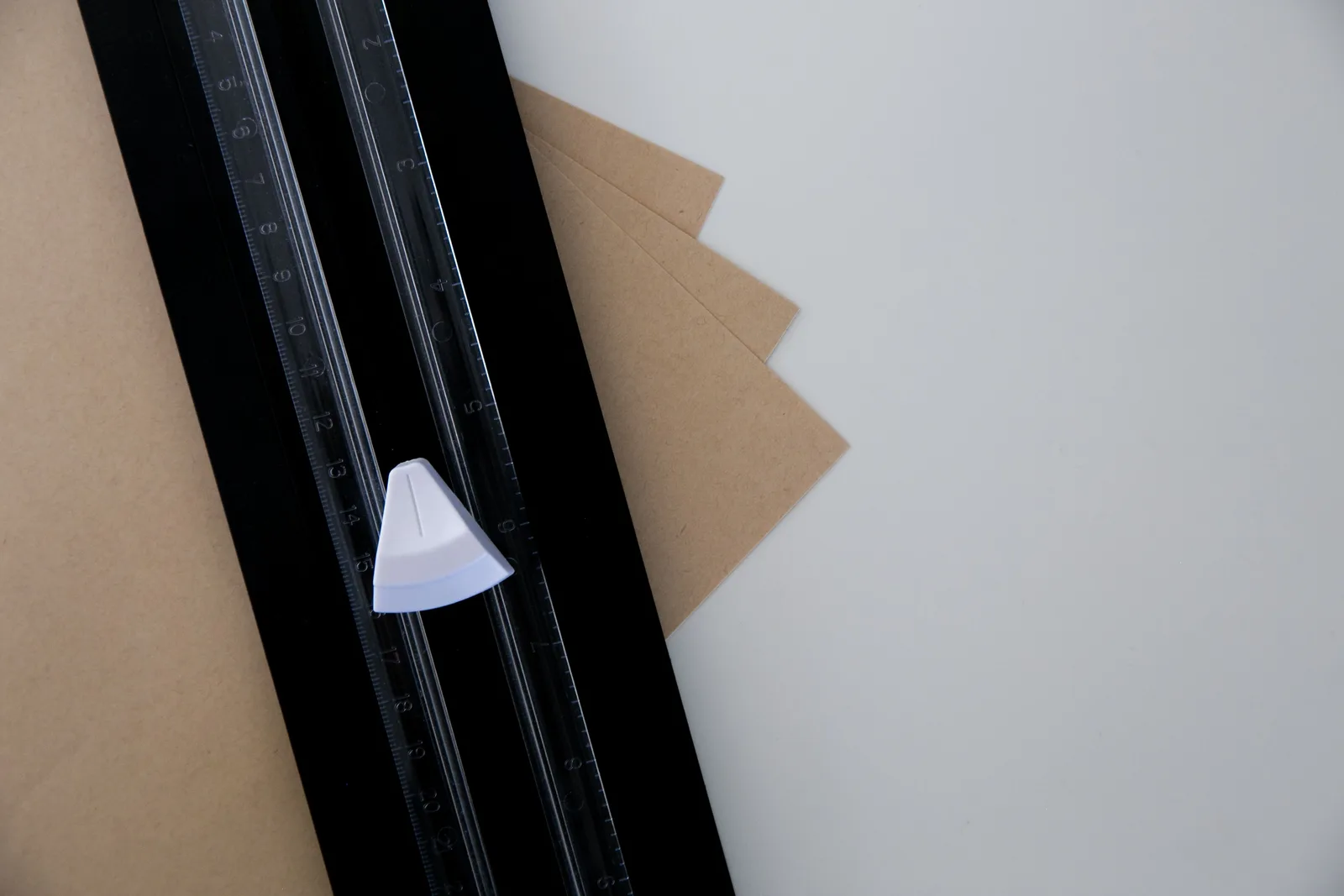
- Long steel rule
- Joined, wandering cuts
- Fresh blades in bulk
- Torn board, slipped hands
- Dividers
- Uneven sewing stations
- Two pressing boards
- Waves at the joint
- Pencil and notebook
- Repeating an error
- Scrap stock for dummies
- Wrong spine width
Prevents
- Long steel rule
- Fresh blades in bulk
- Dividers
- Two pressing boards
- Pencil and notebook
- Scrap stock for dummies
The other five items each leave something to record. The rule and the dividers produce measurements, the blades produce a change date, the pressing boards produce a pressing time, and scrap stock for dummies produces the spine width that decides the swell.
Write in pencil, not ink
Park Service guidance on rare book handling sets out the reading room rules: rare books are used only within an established space under staff supervision. Where the public has access to the reading area, briefcases, bags, coats and ink pens are left outside.
Ink pens, specifically. A pen on a bench is a mistake waiting for an elbow. Keep graphite in the room and ink out of it, so the notebook never becomes the stain on the next book.
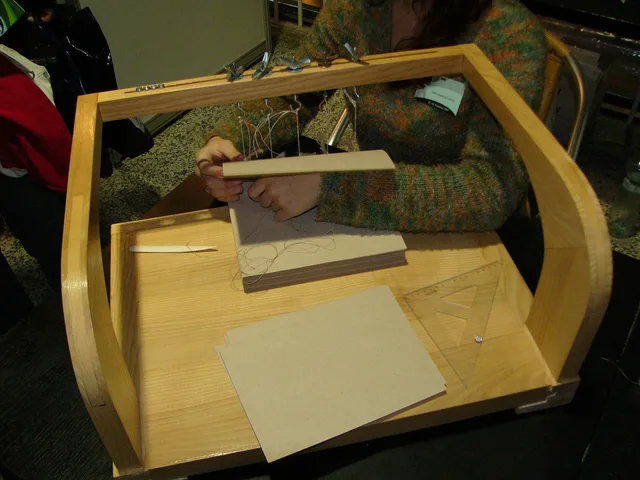
Give the notebook its own corner of the bench, apart from the cutting area and the wet work, so adhesive and board dust stay off the page. A planned bookbinding work surface leaves room for it, and the rule stays clear of the bench edge where it can be knocked.
Reading the pages after a few books
After three or four books, lay the pages side by side. A failure that repeats names itself, because the same line goes wrong in the same way each time. Fix that line before you buy anything.
Dull blades tear rather than cut, so write the date you change a blade as well. A torn board that follows an old blade is a record you can read at a glance. When the page does point to a tool, judging a tool by the error it prevents decides which one comes first.
The first pages are easiest to fill on a set project. A weekend practice plan gives you a small book to make and a notebook page to complete.
A reading list at the back
Keep a short reading list in the last pages. For project ideas at almost no cost, the University of Colorado Boulder's bookbinding references list gathers instructional titles alongside artists' books intended to prompt project ideas. It notes that titles not held at the university can be traced through interlibrary systems.
A library card is cheaper than any tool on this page. Once the five failures are under control, the wider first-year list is in a book arts tool kit.
Common questions
Do I need a special notebook?
No. Any notebook that stays open flat and takes pencil works. What matters is one page per book, with the same five lines every time.
What if the book went well?
Fill the page anyway. A page for a book that went well is the reference for the next one, because it holds the dilution, thread size and pressing time that worked.
Which three entries matter most?
Dilution, thread size and pressing time. Add the grain direction and the dummy's spine width when you can, so the page covers all five failures.
Is a pencil really better than a pen?
On the bench, yes. Ink pens are kept out of rare-book reading rooms for a reason, and a pen beside wet adhesive and paper is a mistake waiting for an elbow.