Reviews
Part of Which error should decide your next bookbinding tool purchase?
Two tools can replace four: bookbinding categories compared for buyers
Categories compared on the one specification that matters in each, plus the two tools that replace four and how printers solved small-tool storage.
What to take away
- Nothing was bought or tested for this article. It compares bookbinding categories, the named tools that fit each, and the one specification that matters in each.
- Storage of small tools is a real decision, and the trade solved it centuries ago.
- Two tools do a job many people buy four for.
- Buy the version you can sharpen, adjust or replace a part of.
Folders, knives, awls and dividers, with the tools to compare
Tools to compare
Named examples and typical US prices
- Folder
- Lineco bone folder ($8 to $14); Lineco Teflon folder ($25 to $40); plastic folder ($4 to $8)
- Knife
- OLFA 9 mm snap-off ($8 to $15); Swann-Morton No. 3 handle with 10A blades ($30 to $45 per 100); X-ACTO No. 1 ($5 to $10)
- Awl
- Lineco round-point awl ($10 to $15); C.S. Osborne bradawl ($15 to $25); needle set in a handle ($8 to $20)
- Dividers
- Starrett 6-inch spring dividers ($50 to $80); General Tools 831 friction dividers ($10 to $18)
- Needle
- John James saddler's harness needles, blunt ($5 to $10 a pack); Bohin sharp sewing needles ($4 to $8 a pack)
- Thread
- Lineco linen thread ($15 to $25 a spool); Coats cotton; bonded polyester ($6 to $12)
What actually differs
- Folder
- Density, edge shape, whether it burnishes
- Knife
- Blade cost and how fast you change it
- Awl
- Point shape and diameter
- Dividers
- Whether the setting holds after ten uses
- Needle
- Blunt does not enlarge the station
- Thread
- Strength for a given diameter
Only the last column decides whether a tool earns its place. Everything else is finish, and finish is what product photography sells.
Needle and thread settle the sewing. A John James saddler's harness needle is blunt, so it slips between signatures without enlarging the station; a sharp needle splits paper. Linen thread in an 18/3 size gives the strength of thicker cotton at a smaller diameter.
The two that replace four
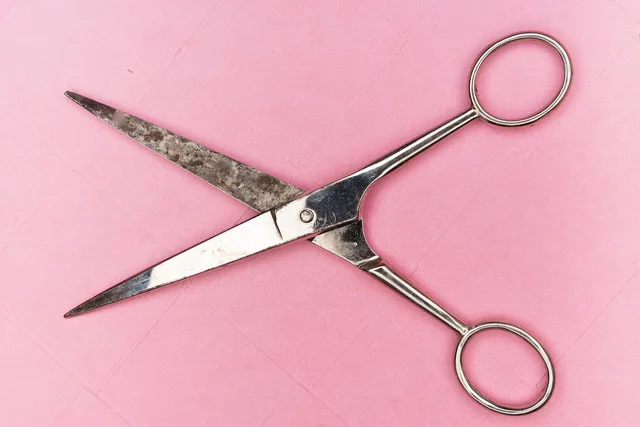
A snap-off knife such as the OLFA 9 mm replaces a scalpel, a craft knife and a paper trimmer for almost all binding work. Edge sharpness is the only variable that matters, and a snap-off renews it in a second.
Two Tools Replace Four
Snap-off knife
- Replaces
- Scalpel, craft knife, trimmer
- Only variable
- Edge sharpness
- Renewal
- Snap in a second
- Availability
- Hardware aisle, $5 to $8
Dividers
- Replaces
- Ruler, template, marking gauge
- Only variable
- Setting that holds
- Renewal
- Step off equal distances
- Availability
- Bench and mail order
Availability decides the pick. OLFA blades sit in hardware aisles at $5 to $8 for a pack of 10; Swann-Morton 10A blades usually arrive by mail order. Both cut board and paper.
Dividers replace a ruler, a template and a marking gauge for sewing stations. Stepping off equal distances beats measuring each mark and carrying the error forward.
Storing small tools is its own problem
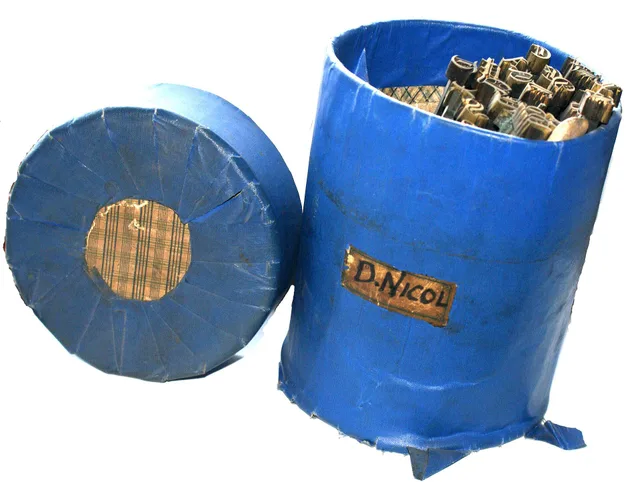
Printers solved the needle hunt long ago. Oxford's history of the book project describes the type cases at the Bodleian Bibliographical Press in its account of movable type.
What look like thin drawers are cases with 153 compartments each. They hold upper and lower case letters, spaces of various widths, special characters, points and ligatures. The most frequently used letters sit in the largest compartments in the middle.
That is the principle to copy. Frequency decides position and compartment size. A shallow drawer with dividers, arranged by how often you reach for something, beats any roll or box.
Bench versions exist. Akro-Mils divider boxes typically run $10 to $20. A Bisley multi-drawer steel unit typically runs $60 to $150. Both sort by frequency rather than by tool family.
Learn what the tool descends from
Understanding where a tool came from tells you what it is optimized for. Santa Clara University's guide to letterpress and hand press printing collects special collections material illustrating the history of printing technology, and describes movable type as the fabrication from metal of letters, punctuation and other individual components arranged for printing.
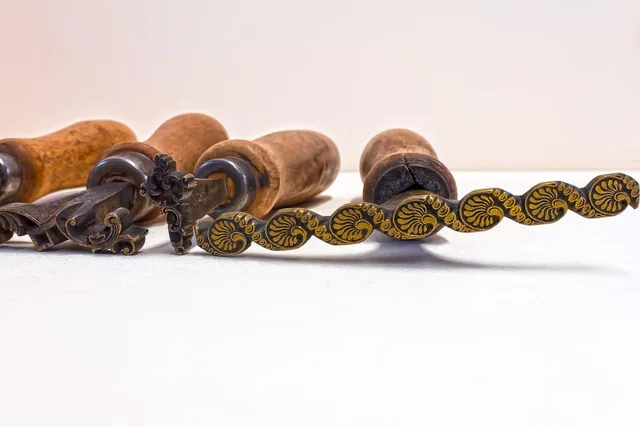
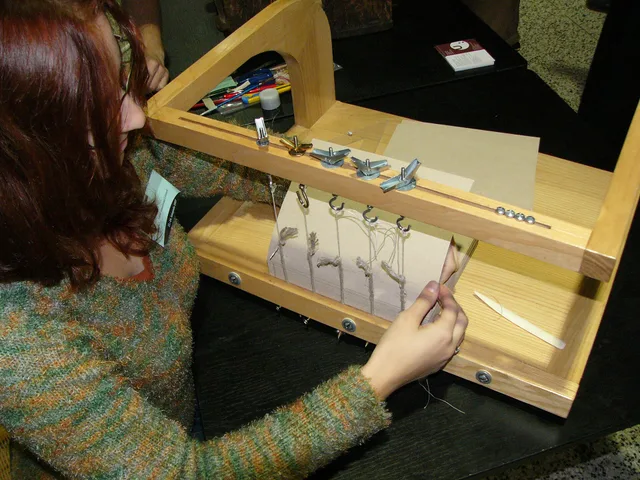
A bone folder, a sewing frame and a plow are all the same kind of object: single-purpose tools refined over centuries until nothing was left to remove. When a modern version drops a feature, it is worth asking what that feature used to do before you assume it was decoration.
What not to compare
Handle color, presentation cases, branded sets. None of them changes a fold or a cut. The kit that prevents specific errors is in a tool kit against binding mistakes, and the judging framework is in judging bookbinding tools.