Industry
Canada Council and provincial arts council grants for a book arts studio
Canada Council grants for artists cover project and equipment costs in book arts studios, and provincial councils add more. Here is how to apply and budget.
What to take away
- Canada Council and provincial arts council grants for a book arts studio rarely arrive as one check. The federal side funds projects, and provincial councils are where equipment and capital money usually sits.
- The Ontario Arts Council and its provincial counterparts fund individuals and collectives, but each has its own residency, citizenship and revenue rules.
- Reviewers read budget lines and documentation before they read your artist statement, so both need to be built for the application, not adapted from a portfolio.
- Equipment requests succeed when the machine is tied to a named body of work, a delivery date and a public outcome.
- Refusals usually come from thin documentation, an unclear budget, or a request that reads like a wish list rather than a project.
- Keep your binding records from the startbench notes, edition records and photographs are the raw material of every future application.
What Canada Council for the Arts funds for a book arts studio
The Canada Council for the Arts is the main federal funder for individual artists and arts organizations. It runs separate programmes for creation, production, dissemination, travel and professional development. For a book arts studio, the practical question is which of those envelopes fits your activity.
A studio that binds, prints, boxes and exhibits sits across several categories. Creation grants cover the making of new work. Production grants cover the costs of finishing and presenting it. Dissemination grants cover exhibitions, fairs and touring. Professional development covers residencies and mentorship.
Equipment sits awkwardly in all of them. The Canada Council does not run a standing open call called "equipment grant" in the way a foundation might. Instead, equipment appears as a budget line inside a project grant, or inside a programme aimed at organizations rather than individuals. That distinction shapes your strategy.
For individuals, the current envelopes are Explore and Create, Professional Development, Arts Across Canada, Arts Abroad and Creating, Knowing and Sharing. Explore and Create carries the Research and Creation and Concept to Realization project grants.
Arts Across Canada covers touring and dissemination inside the country. Arts Abroad covers travel and presentation outside it. Creating, Knowing and Sharing is the stream for First Nations, Inuit and Metis artists, and Small-Scale Activities covers short projects at the low end.
Individual project grants in these streams commonly run from about $5,000 to $60,000. The largest requests go to multi-year production projects; the smallest cover a single trip or a short residency. Treat those figures as typical, not fixed: each programme sets its own ceiling and revises it between years.
Deadlines differ by programme and change between years. Some keep one deadline a year, others two, and the Council lists every upcoming date together on its deadlines page. Each programme page also gives the decision date, which you need before you set a project period.
Canadian Heritage is the federal department behind the arts funding system, and the Canada Council operates at arm's length from it. The department's portfolio also covers heritage programmes that touch archival and conservation work, which matters to studios handling book conservation. You can see the breadth of that portfolio on the Canadian Heritage - Canada.ca site.
For a working binder, the strongest federal case is usually a project that requires a specific machine to be completed. A standing press, a board shear, a guillotine, a foil stamper or a nipping press can all be argued as necessary to deliver a named edition or exhibition.
The Canada Council project grant is the workhorse here. You propose a body of work, a timeline and a budget, and you explain what the money makes possible that would not otherwise happen. Equipment is one line among many. A studio that is serious about book arts buying rarely bought every machine at once.
What the Council does not fund
The Council generally does not fund the purchase of a building, general operating costs for individuals, or work that has already been completed. It also does not fund commercial production for resale as its primary purpose.
That last point matters for binders who take on edition binding for publishers. If the project is contract work for a client, it is a business activity, not an arts project. If the project is your own edition, sold later, it can qualify.
Project grants versus equipment grants: which to apply for first
Apply for a project grant first in almost every case. A standalone equipment request with no project attached reads as a shopping list, and reviewers say so in their assessments.
The sequence that works is: define the project, price the equipment it needs, then apply. If the equipment is expensive relative to the project, split the request across two applications or two years.
Here is a workable order of operations for a studio that is new to public funding.
Order of Operations for First Grant
- Write project description with title and date
- List equipment needed with Canadian supplier quotes
- Mark items essential versus merely useful
- Build budget around essential items only
- Check deadline calendar, apply to nearest programme
A project grant also gives you a track record. Once you have delivered one funded project on time, later equipment-heavy requests carry more weight, because the Council can see you finish what you start.
Provincial councils do run explicit equipment and capital programmes, though they usually fund organizations rather than individuals. The BC Arts Council's Arts Infrastructure Program is one: it has supported equipment, renovation and capital purchases for arts organizations, and its intake is not continuous.
The Canada Council's individual programmes tend to fold equipment into project budgets instead. Do not invent a federal equipment grant that does not exist in the current guidelines; read the programme page for the year you are applying.
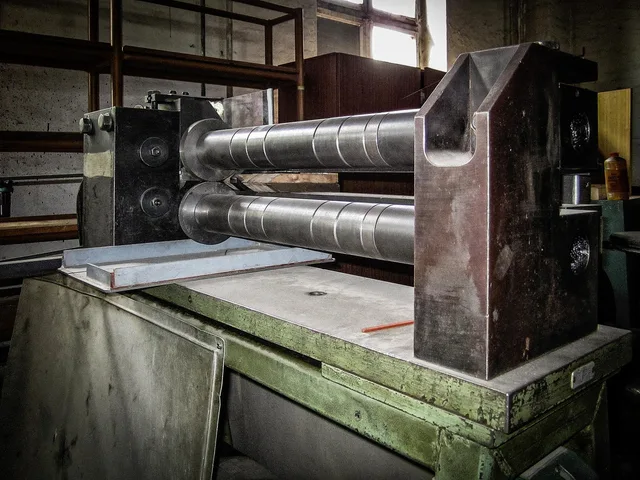
If you need a model for how equipment lists are read by assessors, look at how studios present their own machinery. Bindery equipment lists often say more about a bookbinding project than a portfolio does, because they show what work is actually possible in the space.
Provincial arts councils: Ontario Arts Council and counterparts
Provincial arts councils are often the better first stop for a small studio. They tend to have smaller maximum grants, shorter forms and more frequent deadlines than the federal system.
Provincial Funders by Fit
Province
- Ontario
- Ontario Arts Council
- Quebec
- Conseil des arts et des lettres
- British Columbia
- BC Arts Council
- Alberta
- Alberta Foundation for the Arts
- Nova Scotia
- Arts Nova Scotia
Main funder
- Ontario
- Craft project grants
- Quebec
- Creation, residency, publishing
- British Columbia
- Project, capital, equipment
- Alberta
- Individual craft projects
- Nova Scotia
- Individual grants, export support
Typical fit
- Ontario
- Quebec
- British Columbia
- Alberta
- Nova Scotia
The Ontario Arts Council funds individual artists, ad hoc groups and organizations across craft, visual arts and literature. Its craft programmes support creation, production and presentation, and they are open to book artists working in binding, papermaking, marbling and box making.
Provincial arts council funding varies a great deal by province. Some councils are arms-length agencies with their own legislation. Others sit inside a ministry and share staff with tourism or heritage programmes. The application experience differs accordingly.
Provincial arts councils
| Province | Main provincial funder | Typical fit for a book arts studio |
|---|---|---|
| Ontario | Ontario Arts Council | Creation, production and craft-specific project grants |
| Quebec | Conseil des arts et des lettres du Quebec | Creation, residency and French-language publishing support |
| British Columbia | BC Arts Council | Project grants, capital and equipment support for organizations |
| Alberta | Alberta Foundation for the Arts | Individual project grants across craft and visual arts |
| Nova Scotia | Arts Nova Scotia and provincial growth programmes | Individual grants plus business and export support |
| Manitoba | Manitoba Arts Council | Creation and presentation grants for individuals and groups |
| Saskatchewan | Saskatchewan Arts Board | Individual and group project grants |
| Newfoundland and Labrador | ArtsNL | Project and professional development grants |
Read the current guidelines for your province before you write anything. Eligibility definitions, maximum request amounts and assessment criteria change between years, and a rejected application is often rejected on a technicality rather than on merit.
Municipal and regional add-ons
Cities and regions often top up provincial money. Toronto, Ottawa, Montreal, Vancouver and Calgary all run cultural grant programmes of their own. These are usually small, fast and competitive, and they suit a first application because the forms are short.
Eligibility rules for individual book artists and studios
Eligibility rules for book artists turn on four things: who you are, where you live, what you have already received, and whether the work is artistic or commercial.
Most Canada Council individual programmes require Canadian citizenship or permanent resident status, and residency in Canada for most of the funded period. Some programmes require you to be a professional artist, which the Council defines through training, peer recognition and a sustained body of work.
Provincial councils add their own tests. Ontario Arts Council programmes require Ontario residency at the time you apply, and Quebec programmes often require French-language application materials.
Where a council sets a minimum period of prior residence, it is measured in months. That minimum runs from a date you can document, so assume a full year in the province before you plan an application.
Studios face a second layer of rules. If you apply as an organization, you need a legal structure, a board or an equivalent governance model, and at least one year of public activity; some programmes ask for two. If you apply as an individual, you cannot claim organization-level costs.
What counts as a professional artist
Training counts, but so does peer recognition. A record of exhibitions, fairs, commissions, publications or teaching can establish it. Membership in a guild such as the Canadian Bookbinders and Book Artists Guild is useful context, though it is not a formal eligibility requirement.
Revenue and business rules
Once money changes hands, the Canada Revenue Agency rules for craft businesses come into play. GST or HST registration depends on your revenue level, and the small supplier threshold is $30,000 over four consecutive calendar quarters or in a single quarter. Grant income is generally taxable, so budget for it.
If your studio sells editions, teaching or supplies, keep the commercial records separate from the grant-funded project records. Reviewers and auditors both care about the distinction, and clean separation makes reporting straightforward.
Budget lines reviewers expect from a book artist
A book arts budget is read line by line. Reviewers look for realism, completeness and a clear link between each line and the project description.
The lines below are the ones that appear most often in successful craft applications. Not every project needs all of them, but leaving out an obvious one invites a question.
Budget Lines Reviewers Expect
- Artist fees at a justifiable daily rate
- Materialspaper, board, cloth, leather, thread, adhesive
- Finishing suppliesfoil, gold leaf, tooling
- Equipment purchase or rental with supplier quotes
- Equipment maintenance, blades, parts, servicing
- Studio rent or project-period share
- Photography, documentation, digital file preparation
- Shipping, crating, insurance for finished work
Quote everything. A materials line without a supplier quote reads as a guess. If you have priced your own work before, you already know how quickly small quantities add up; the same logic applies to grant budgets, where the cost per finished book is a more honest figure than a per-sheet price.
A worked budget for a 20-copy edition
Suppose you plan a limited edition of twenty copies, hand bound, with a small exhibition at the end. Your project period is nine months. You need a standing press and a board shear to finish the edition on schedule.
The table below is a typical cost structure for that project, rounded and shown in Canadian dollars. The fee line works out to $375 a day; anchor your own fee to a schedule such as the one CARFAC publishes, then adjust for your track record. Replace every purchase line with a supplier quote before you submit.
The request side has to balance against the same total.
The public share here is $24,000 of a $31,000 project, and the machines plus servicing are about a fifth of the cost. Check the stacking rule on both programmes before you claim the two grants together.
The same table has three lines you should never add. Do not include your own unpaid time as a cash cost, do not list personal living expenses, and do not pad the materials line. Reviewers notice inflated numbers, and a padded budget undermines an otherwise strong proposal.
Supporting material: how to document binding work in an application
Documentation of binding work is where many strong projects lose points. Reviewers are often not binders. They need to see structure, finish and consistency, and they need captions that tell them what they are looking at.
Images should show the whole book, the spine, the boards, the endpapers and one detail of the finishing. Ten well-chosen images beat thirty casual ones. Keep the background neutral and the lighting even.
For each image, write a caption with the title, the year, the materials, the structure and the dimensions. Name the binding style precisely: coptic, case, limp vellum, long stitch, Japanese stab, accordion. Precision signals training.
Written documentation
A short process document helps. Describe the edition size, the paper, the sewing supports, the covering material and the finishing. Mention any archival or conservation standards you followed, since the Canadian General Standards Board publishes paper and archival standards that reviewers in heritage settings recognize.
If your work sits near conservation, say so carefully. The Canadian Conservation Institute publishes free technical notes on materials and storage, and citing that guidance shows you understand permanence rather than just appearance.
Where the work has been seen
List exhibitions, fairs, guild shows, library displays and commissions. Library and Archives Canada and the Canadian Heritage Information Network both maintain collections and records that can matter for artists working with book structures and archival forms.
The checklist before you submit
- Project description under the word limit, with a title and dates
- Budget balanced, with quotes for every purchase over a small threshold
- Images captioned with structure, materials and dimensions
- Process document attached where the programme allows it
- Eligibility confirmed against the current guidelines
- Tax and business records separated from project records
- A second reader has checked the form for errors
Provincial funding context in BC, Quebec, Nova Scotia and the prairies
Funding context changes the shape of a studio. BC, Quebec, Nova Scotia and the prairie provinces each support book arts differently, and knowing the local pattern saves wasted applications.
British Columbia combines arts council money with broader provincial programmes. The Sports, recreation, arts and culture - Province of British Columbia pages set out the cultural funding picture.
The Economic development funding & grants - Province of British Columbia pages cover grants aimed at businesses. Those can suit a studio that sells editions or runs a teaching programme.
Quebec treats culture as a distinct portfolio with its own ministry and a dense network of support. The Culture | Gouvernement du Québec portal is the starting point, and most application materials are in French. Studios in Montreal and Quebec City also draw on municipal and regional funds.
Nova Scotia mixes arts funding with economic development. The Department of Growth and Development - Government of Nova Scotia department handles programmes that support small creative businesses alongside Arts Nova Scotia grants, which helps studios that combine making with selling.
The prairies are grant-rich relative to population. The Manitoba Arts Council, Saskatchewan Arts Board and Alberta Foundation for the Arts all fund individual craft artists, and competition is often lighter than in Ontario or BC. Travel costs are higher, so budget them honestly.
Newfoundland and Labrador rounds out the picture through ArtsNL, which funds projects and professional development for individual artists. Island and coastal studios should price shipping carefully. The book arts cost of getting finished sheets to buyers is a separate calculation from the cost of making them.
If you are comparing how other jurisdictions structure support for independent makers, the US Book Arts Grants picture is a useful contrast, because American funders often separate equipment from project money more cleanly than Canadian programmes do.
Climate and storage as a budget factor
Canadian studios face real climate variation. Coastal BC needs dehumidification, the prairies swing between dry winters and humid summers, and Atlantic provinces deal with salt air. Environmental control is a legitimate budget line, not an extravagance, because it protects the work you are funded to make.
Common reasons book arts applications are refused
The most common refusal reason is a project that cannot be described in one clear paragraph. If the assessor cannot say what you will make and when, the budget will not save the application.
Five Common Refusal Reasons
- 1Project cannot be described in one clear paragraph
- 2Thin documentation no captions, no process notes
- 3Budget does not match the description
- 4Eligibility miss wrong programme or residency
- 5Request reads as a wish list with no public outcome
The second is thin documentation. Images without captions, no process notes and no record of past work leave reviewers guessing about skill level, and guessing usually goes against the applicant.
The third is a budget that does not match the description. A materials line that is too low, an artist fee that is missing, or equipment with no quotes all signal that the project has not been thought through.
The fourth is an eligibility miss. Applying to the wrong programme, missing a residency requirement or exceeding a maximum request amount ends an application before anyone judges it on merit.
The fifth is a request that reads as a wish list. A project with no public outcome gives the reviewer nothing to assess against the criteria.
How to reduce the risk
Apply to more than one funder in the same year, and tailor each application to that funder's criteria rather than sending the same text everywhere. Ask someone outside the craft to read your project description and tell you what they think you are making.
Keep your records as you work. Bench notes, edition records, supplier invoices and photographs accumulate into a documentation file you can draw on for years, and that file is what turns a hopeful application into a fundable one.